

chinese medicine stomach pain

Chinese Medicine for Stomach Pain: Causes, TCM Diagnosis, and Natural Treatments

Stomach pain is a common issue that many individuals experience. This may include bloating, heartburn, diarrhoea, constipation, and other issues that can cause discomfort during daily activities. This guide explores the causes of stomach pain from a TCM perspective, along with various Chinese medicines practitioners may recommend.

Understanding Stomach Pain in Chinese Medicine (TCM Perspective)

In Traditional Chinese Medicine (TCM), the Spleen and Stomach are regarded as the foundation of health and are important for providing the Qi and blood to our body through the digestion and absorption of food. Stomach pain is viewed as a manifestation of imbalance among the body’s internal energies, especially those of the liver (gān ), spleen (pí ), and stomach (Wèi ). This imbalance hinders our digestive system from functioning optimally. As a result, our body cannot be optimally nourished by the food we eat. 

Common Causes of Stomach Pain from a TCM Perspective

According to TCM, digestive issues or stomach pain can be associated with the following causes:

Spleen-Stomach Deficiency

TCM believes that the Spleen-Stomach may be overworked due to unhealthy eating habits. This may weaken the Spleen-Stomach system in the long run, causing it to function below its full potential. People with Spleen-Stomach deficiency may experience stomach pain, including poor appetite, bloating after eating, diarrhoea, and fatigue.

Dampness-Heat

Excessive consumption of fried, greasy, sweet, and spicy foods may contribute to the accumulation of damp heat in the body. This disharmony occurs when excess water combines with heat or heat toxins. This damp heat may then be trapped in the Spleen-Stomach, making it hard to remove. People with damp-heat may experience bloating, nausea, or loose stools.

Liver Qi stagnation

In TCM, the liver is known to regulate our emotions and the flow of Qi. A smooth flow of Qi also promotes a more even distribution of nutrients in our body. When the liver is under constant stress, Liver Qi may be unable to flow freely, leading to pain in the lower abdomen and sides.

TCM Diagnosis for Stomach Pain

To diagnose stomach pain and recommend solutions for relief and restoration, TCM practitioners use the following diagnostic methods:

1. Observation (Wàng 望)

Practitioners may observe your tongue colour, coating, and texture to gain insight into signs of damp-heat buildup, Qi stagnation, and digestive weakness.

2. Listening and Smelling (Wén 闻)

In addition to observing the tongue, practitioners will examine your tone of voice, breathing patterns, and body odour to uncover hidden clues to internal deficiencies.

3. Interrogation (Wèn 问)

In TCM, interrogation involves gathering information about your symptoms, lifestyle, diet, and emotional state. Getting these details helps us identify possible causes of the underlying pain.

4. Palpation (Qiè 切)

Lastly, practitioners may check your pulse and your abdomen or back to identify any signs of tenderness or stagnation. This will provide insights into the condition of your Qi, blood, and other internal systems.

Chinese Medicine Treatments for Stomach Pain

TCM Herbs Medical Treatment

After learning more about the symptoms and causes of the pain that you experience, TCM practitioners may recommend various Chinese medicine treatments for stomach pain, such as:

Herbal Prescriptions

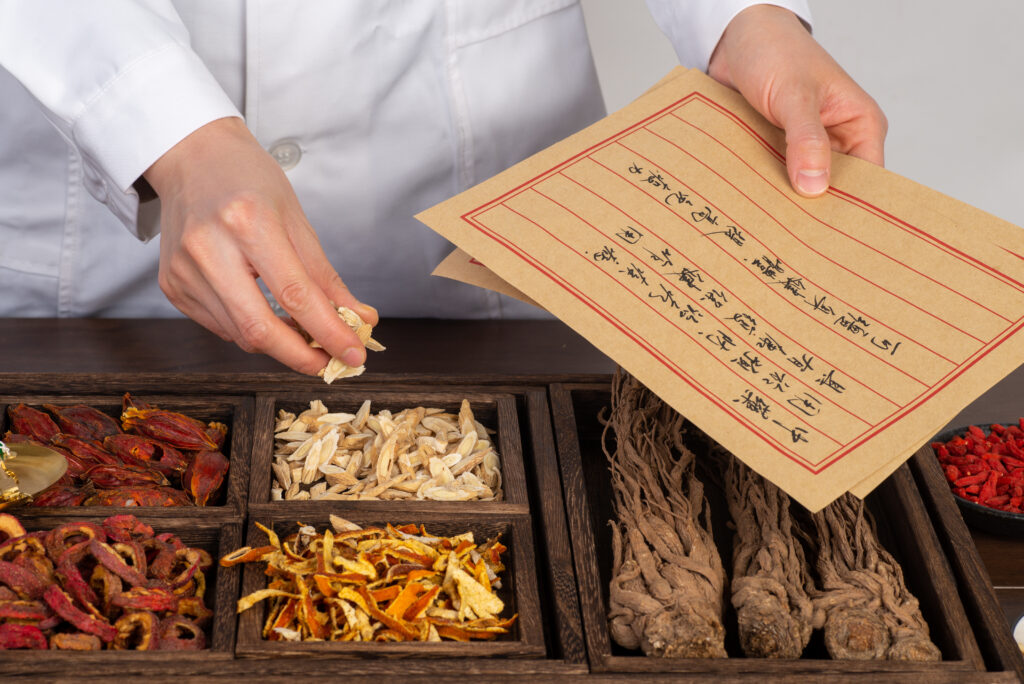
Chinese herbal prescriptions may be given according to the root cause of the stomach pain. For example, Ban Xia Xie Xin Tang (半夏) may help eliminate damp-heat, while Huang Qin () and Huang Lian () are known to relieve bloatedness. For individuals with Spleen-Stomach deficiency, Bu Zhong Yi Qi Tang (中益) is typically prescribed. Bai Zhu (白) and Huang Qi () may also be given to strengthen the Spleen and improve digestive function.

Acupuncture

acupuncture tcm for stomach pain

Acupuncture is another commonly used TCM treatment for stomach pain. By focusing on acupoints such as Zhong Wan (中脘), Tian Shu (天), and Liang Men (梁), TCM practitioners can help strengthen the Spleen-Stomach, potentially reducing digestive issues. If your stomach pain is stress-related, focusing on the Tai Chong (太冲) and He Gu (合谷) may help to reduce Liver Qi stagnation.

Moxibustion

Moxibustion may be recommended as a complementary therapy to strengthen Qi and improve blood circulation. In this method, sticks or cones of dried mugwort are burned near specific acupoints to generate heat, thereby addressing Qi insufficiency and reducing dampness. Moxibustion may be especially beneficial if you have stomach pain, such as indigestion, loose stools, or abdominal bloating.

Lifestyle Adjustments

In addition to treatments, TCM practitioners may advise you on lifestyle adjustments to reduce the likelihood of your stomach pain recurring. For instance, reduce your intake of foods high in oils, sugar, and salt, as well as raw or cold foods, as they tend to overwork the stomach. Eating at a regular schedule also helps maintain the formation of Qi and blood to nourish your organs sufficiently. Participating in meditation, qi gong, and deep breathing may also help manage stress, rebalancing the mind and body.

Discover the Causes and Natural Treatments for Stomach Pain

Stomach pain is often treated as a common issue, but it may also signal underlying problems and imbalances in the body. TCM provides a holistic, integrated approach to diagnosing the root causes of your stomach pain, offering a tailored treatment plan that helps alleviate symptoms and improve your overall well-being. 

Yu He Tang Wen’s TCM Center is an experienced TCM clinic in Singapore dedicated to helping you resolve your stomach issues. We combine Chinese herbs, acupuncture, and lifestyle adjustments to help rebalance your system. Get in touch with us for a consultation today!